
About
About Pavillon
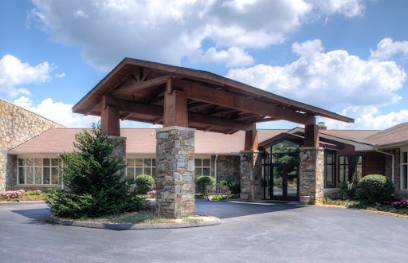
Pavillon is a CARF-accredited residential treatment facility located at 241 Pavillon Place in Mill Spring, NC — in Polk County, drawing patients from across North Carolina and neighboring South Carolina, including Greenville and Wilmington. The facility is licensed by the North Carolina Department of Health and Human Services specifically for medical detox, residential treatment, facility crisis services, and day treatment for substance abuse, positioning it as a clinically credentialed option for people who need structured withdrawal management before or alongside longer-term care. It operates around the clock, seven days a week.
Pavillon’s continuum of care begins with medically supervised detox and extends through a structured residential program, an outpatient program, and an intensive outpatient program (IOP). The residential component follows a 6-week model with a minimum 30-day stay, offering one of the more defined program-length commitments in the region. That full continuum — from acute detox through step-down outpatient levels — means patients can move through withdrawal management and into sustained treatment without changing facilities.
Clinically, Pavillon treats alcohol use disorder, prescription drug use, co-occurring disorders and dual diagnosis, and trauma and PTSD. Cognitive Behavioral Therapy is among the confirmed therapeutic methods used. The facility maintains an average counselor-to-patient ratio of 1:6 and offers private rooms, both of which distinguish it operationally from higher-volume programs. Accreditations include CARF and the Federation of State Physician Health Program, reflecting an additional emphasis on serving professionals in recovery.
Pavillon serves men, women, young adults ages 18 to 25, and professionals. Payment options include private insurance — both in-network and out-of-network — and self-pay. Alumni services, alumni events, a relapse prevention program, and extended care round out the post-treatment support structure, giving patients a defined path forward after residential discharge.
- NC DHHS-licensed specifically for medical detox, residential treatment, and facility crisis services — not just a general behavioral health license
- Full continuum from medically supervised detox through IOP, allowing patients to complete withdrawal management and step-down treatment without transferring facilities
- Defined 6-week residential program with a 30-day minimum — a structured timeline uncommon in programs that offer open-ended stays
- Average counselor-to-patient ratio of 1:6, a measurably lower caseload than many residential programs
- CARF accreditation plus Federation of State Physician Health Program accreditation, reflecting a documented track record of serving professionals in recovery